
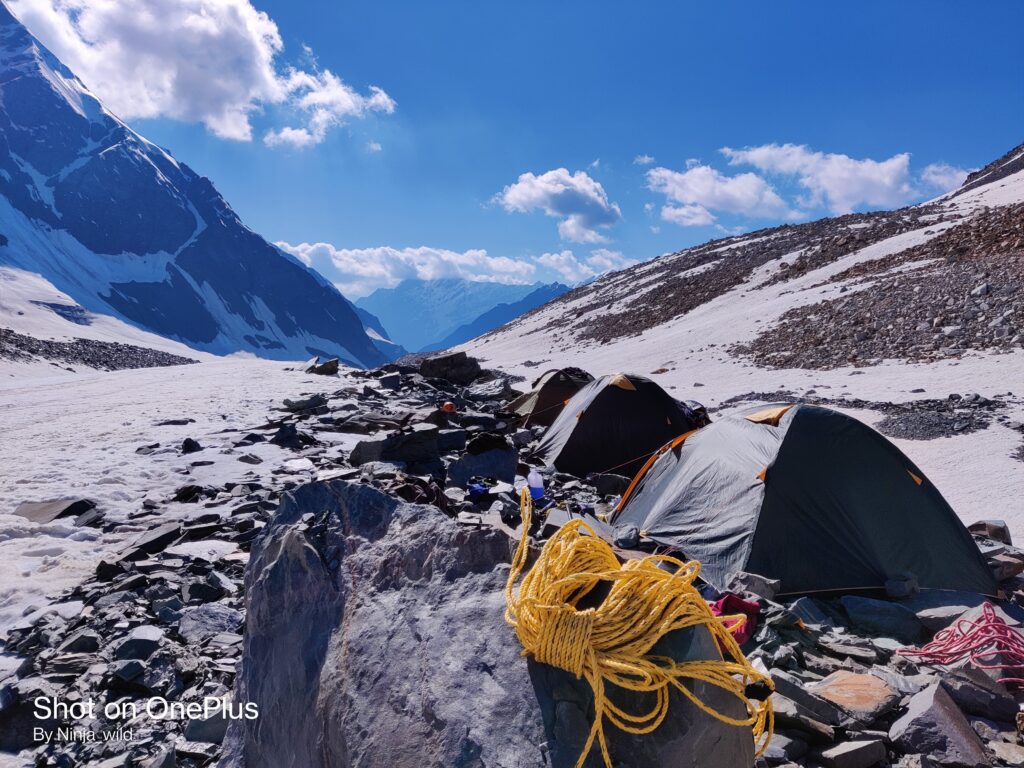
Standing tall in the Pir Panjal range above the Solang and Malana valleys, Hanuman Tibba is regarded by many Indian mountaineers as one of the most technically demanding intermediate peaks in Himachal Pradesh. While it sits close in altitude to popular climbs like Deo Tibba, its steeper ice sections and more serious summit-day terrain set it apart as a climb for those looking to genuinely test their technical mountaineering skills. Here’s a complete guide to planning your Hanuman Tibba expedition.
Overview: A Peak That Demands Respect
Hanuman Tibba doesn’t get quite the same mainstream attention as Deo Tibba or Friendship Peak, and that’s partly because it demands a more serious skill set. Its neighbouring peak, White Sail, is a well-known technical objective for advanced climbers, and Hanuman Tibba shares much of that same rugged, glaciated character. For climbers who’ve already built a foundation on peaks like Deo Tibba or Yunam and are looking for a genuine technical step up — without committing to an extreme-altitude expedition like Satopanth — Hanuman Tibba fits that gap precisely.
Hanuman Tibba Height and Altitude
Hanuman Tibba reaches an altitude of 5,982 metres (19,626 feet). While its height is similar to Deo Tibba, the technical nature of the terrain leading to the summit means climbers spend more time in exposed, demanding conditions relative to the altitude gained, making the overall experience feel more serious than the number alone might suggest.
Location
Hanuman Tibba is located in the Pir Panjal range of Himachal Pradesh, near the Solang Valley and Malana region, not far from Manali. It sits in the same broader mountain range as Deo Tibba and Friendship Peak, though its specific approach and technical character set it apart considerably.
Route and Itinerary
A typical Hanuman Tibba expedition follows this general structure:
- Manali to Solang/Dhundi – The expedition begins with a short drive from Manali to the Solang Valley road-head (alternative approaches exist via the Malana side, depending on the operator).
- Approach Trek Through Forest and Alpine Terrain – Climbers trek through pine forest that gradually opens into higher alpine meadows and rockier terrain as altitude increases.
- Establishing Base Camp – Base camp is set beneath a steep glacier approach, offering dramatic views of the surrounding Pir Panjal peaks.
- Base Camp Acclimatization and Technical Skills Refresher – Given the technical nature of the summit day ahead, this stage often includes more intensive practice with ice-axe technique, crampon use on steep terrain, and fixed-rope ascending/descending.
- Summit Push – The final push involves technical ice climbing on steeper faces than most peaks in this category, requiring careful movement, fixed-rope sections, and strong technical competence, before returning to base camp.
- Descent – The team retraces the route back down to the road-head and returns to Manali.
The full expedition typically takes 12 to 14 days, including acclimatization rotations and a buffer for weather, reflecting the more technical and cautious pace required on this peak.
Hanuman Tibba Distance
The total distance covered during the expedition is approximately 40 to 45 km round trip — moderate in length, but with a disproportionate share of technical terrain relative to that distance compared to peaks like Deo Tibba or Friendship Peak.
Best Time to Visit Hanuman Tibba
The best time to visit Hanuman Tibba is generally narrower than for some neighbouring peaks, falling into:
- May to June, when conditions on the steeper faces are most predictable
- September, offering a second, shorter window after the monsoon clears
Because of the peak’s more technical, steeper snow and ice sections, climbing outside these windows carries considerably higher risk of unstable snow conditions, making careful timing especially important here.
Weather Conditions
Base camp temperatures during the climbing season typically range between 8-15°C in the day, dropping close to or below freezing at night. On the steeper upper sections and summit ridge, weather can shift rapidly, and Hanuman Tibba is known among climbers for being somewhat more volatile than Deo Tibba in this regard, with local wind patterns off the steep faces creating sudden and sometimes disorienting conditions. Careful weather monitoring throughout the expedition, rather than relying purely on seasonal averages, is essential.
Snow and Glacier Conditions
This is where Hanuman Tibba distinguishes itself most clearly from other peaks in this comparison group. The upper mountain features steep, sustained snow and ice sections that are notably more technical than the moderate slopes found on Deo Tibba or Friendship Peak. Snow stability on these steeper faces can change quickly, and climbers should expect a genuine need for technical ice climbing skills — front-pointing with crampons, secure ice-axe placements, and confident movement on exposed, steep terrain — rather than the more straightforward glacier walking found on some neighbouring peaks.
Fitness Level Required
Hanuman Tibba demands a high fitness level, reflecting the sustained technical effort required on summit day. Climbers should focus on:
- Strong cardiovascular endurance for extended technical climbing at altitude
- Significant upper body and grip strength for sustained ice-axe and rope work on steep terrain
- Leg and core strength for balance and stability on exposed, technical sections
A structured training program of at least 10-12 weeks, ideally including some technical ice or mixed-climbing practice, is strongly recommended before attempting this peak.
Experience Level Needed
Hanuman Tibba is not suitable for beginners. Given the technical ice climbing involved on the final approach, climbers should ideally have:
- Prior experience on at least one 6,000 m peak involving glacier travel (such as Deo Tibba or Yunam Peak)
- Solid technical proficiency with crampons and ice axe on steep, exposed terrain
- Comfort with fixed-rope ascending and descending in demanding conditions
Climbers attempting Hanuman Tibba without this technical background face significantly elevated risk, and most reputable operators will assess prior experience before accepting participants for this particular expedition.
Difficulty Rating
Hanuman Tibba is rated difficult to very difficult, primarily due to the steep ice sections encountered on the final summit approach. It’s considered more technically demanding than its near-equal-altitude neighbour Deo Tibba, and sits closer in overall seriousness to Black Peak, despite its lower altitude.
IMF Permits and Regulations
Climbing Hanuman Tibba requires a mandatory IMF (Indian Mountaineering Foundation) permit. Depending on the specific route chosen — particularly if approaching via the Malana side — additional local area permissions may also be required. As with other regulated peaks, most established expedition operators manage this documentation as part of their overall package, but it’s worth confirming permit and route details well in advance given the added complexity of route options for this peak.
Equipment Checklist
A comprehensive equipment list for Hanuman Tibba includes:
- Technical gear: Technical ice axe (or two tools, depending on route conditions), crampons suited for steep ice, climbing harness, ascender/jumar, multiple carabiners, ice screws, helmet
- Clothing: Down jacket, thermal base and mid layers, waterproof outer shell, insulated technical gloves plus liner gloves, balaclava, UV-protection glacier glasses/goggles
- Footwear: Insulated, stiff-soled mountaineering boots compatible with technical crampons
- Camping gear: Four-season sleeping bag (rated to at least -15°C to -20°C), insulated sleeping mat, headlamp with spare batteries
- Personal: Trekking poles for the approach, high-SPF sunscreen and lip balm, hydration system, personal first-aid kit, and altitude sickness medication as advised by a doctor
Given the technical nature of this climb, it’s worth testing all ice-climbing equipment beforehand, ideally on a mixed-terrain practice climb or through a technical mountaineering course.
How Hanuman Tibba Compares to Other Peaks
Hanuman Tibba occupies a distinctive niche in this group of peaks. Compared to Deo Tibba (6,001 m), which sits at a similar altitude, Hanuman Tibba is considerably more technical, with steeper ice sections demanding a higher level of climbing skill. Compared to Friendship Peak (5,289 m) or Yunam Peak (6,111 m), it’s a clear step up in difficulty, better suited to climbers looking for genuine technical challenge rather than a straightforward glacier walk-up. Against Black Peak (6,387 m), the two peaks are comparably serious in terms of technical demand, though Hanuman Tibba’s lower overall altitude means slightly less extended exposure to altitude-related fatigue. It remains a notch below Mt. Satopanth (7,075 m) in overall seriousness, given Satopanth’s extreme altitude and considerably longer expedition duration.
Final Thoughts
Hanuman Tibba expedition is the peak for climbers who want a genuine technical ice-climbing challenge without stepping into extreme-altitude territory. Its steep summit approach, volatile local weather, and demanding snow conditions make it a serious undertaking best reserved for those with prior glacier and ice-climbing experience. Choose the May-June or September window carefully, arrive with solid technical preparation, and climb only with an experienced, IMF-registered operator — and Hanuman Tibba will reward you with one of the most technically satisfying summits available in Himachal Pradesh’s Pir Panjal range.