
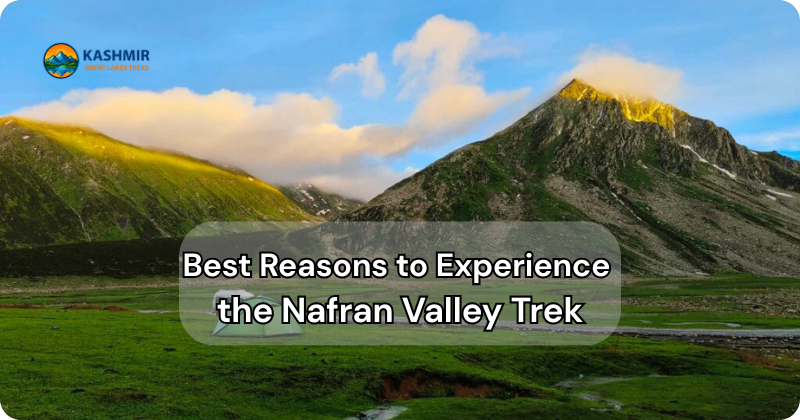
The Nafran Valley Trek is one of Kashmir’s most spectacular yet lesser-known alpine adventures, offering an extraordinary journey through pristine wilderness that remains largely undiscovered by mainstream trekking tourism. Located in the Gurez Valley region of northern Kashmir, near the Line of Control, Nafran Valley represents the kind of untouched Himalayan paradise that’s becoming increasingly rare. This trek takes you through dense forests, across rushing streams, past cascading waterfalls, and into vast high-altitude meadows surrounded by towering peaks. With its remarkable biodiversity, stunning landscapes, authentic cultural encounters, and genuine sense of remoteness, Nafran Valley offers experiences that even seasoned Himalayan trekkers find extraordinary. Here are the most compelling reasons why this hidden gem deserves your attention.
1. Discover Kashmir’s Last Undiscovered Gem
True Wilderness in an Age of Over-Tourism
In an era when popular trekking destinations suffer from overcrowding and environmental degradation, Nafran Valley remains remarkably pristine and undiscovered. Few trekkers have even heard of this valley, let alone visited it. This obscurity is Nafran’s greatest asset—you’re exploring genuinely uncharted territory where each footstep feels like discovery rather than following well-worn tourist paths.
The valley sees perhaps a few dozen trekkers annually, compared to thousands who trek popular Kashmir routes. This extreme low traffic creates a wilderness experience that’s becoming impossible to find in more accessible regions. You won’t encounter crowds, won’t compete for campsites, and won’t see evidence of mass tourism marring the landscape.
For adventurous souls seeking authentic exploration rather than packaged tourism, Nafran Valley delivers the kind of experience that older generations of trekkers enjoyed before mountain tourism became industrialized. This is trekking as discovery—raw, real, and remarkably special.
The Thrill of True Exploration
There’s a particular psychological reward that comes from visiting places few others have experienced. Nafran Valley provides this satisfaction in abundance. You can legitimately claim to have explored somewhere genuinely remote and rarely visited, not just followed a popular trail that millions have walked before you.
This exploratory quality adds excitement to the trek. Every bend in the trail reveals landscapes that haven’t been photographed thousands of times, every campsite feels like your personal discovery, and every interaction with local communities carries the freshness of genuine cultural exchange rather than rehearsed tourism transactions.
2. Witness Some of the Himalayas’ Most Dramatic Waterfalls
Cascading Water in a Verdant Amphitheater
Nafran Valley is renowned for its spectacular waterfalls—some of the most impressive in the Kashmir Himalayas. Multiple cascades tumble down steep mountain walls, creating a symphony of rushing water that provides the valley’s constant soundtrack. These aren’t distant waterfalls viewed from afar but massive, thundering cascades you walk beside, camp near, and feel the mist from.
The most spectacular waterfall in the valley plunges hundreds of feet down a sheer rock face, creating rainbows in its spray during sunny hours. The volume of water, especially during early season when snowmelt is maximum, is genuinely awe-inspiring. Standing near these cascades, feeling the ground vibrate, hearing the roar of falling water, and being enveloped in cool mist creates visceral experiences that photographs cannot capture.
These waterfalls aren’t just scenic features but defining characteristics of Nafran’s landscape. The abundance of water creates lush vegetation, supports diverse wildlife, and gives the valley a verdant, life-filled quality that contrasts with drier Himalayan regions.
Photography Paradise for Water Features
For photographers, Nafran’s waterfalls provide exceptional subjects. The combination of massive water volume, dramatic drops, misty conditions, and surrounding vegetation creates ideal conditions for waterfall photography. Long exposures capture the ethereal quality of flowing water, while faster shutter speeds freeze individual droplets in mid-flight.
The waterfalls also create microenvironments where light behaves beautifully. Rainbows appear frequently in the spray, shafts of light pierce through mist, and the interplay of water, rock, and vegetation creates endlessly varied compositions. These natural studios reward patient photographers with images that stand out from typical mountain photography.
3. Trek Through Dense, Pristine Himalayan Forests
Cathedral-Like Forest Passages
Unlike many high-altitude treks that quickly leave treeline behind, Nafran Valley features extensive forest trekking through some of Kashmir’s most beautiful and intact woodlands. These forests—comprising pine, fir, birch, walnut, and other species—create cathedral-like passages where sunlight filters through dense canopy and the air carries the sharp scent of resin and damp earth.
Walking through these forests provides a different trekking aesthetic than open mountain landscapes. The enclosed, intimate quality of forest trails, the dappled light, the sounds of birds and rustling leaves, and the rich biodiversity create experiences that complement rather than compete with the alpine scenery that comes later in the trek.
The forests are remarkably pristine, showing minimal signs of human impact. Old-growth trees, fallen logs supporting new growth, and complex understory vegetation indicate healthy, functioning ecosystems. These forests remind trekkers that mountains aren’t just bare rock and grass but include vital forested zones that deserve equal appreciation.
Rich Biodiversity and Wildlife Habitat
The forests support exceptional biodiversity. Bird species include Himalayan woodpeckers, nutcrackers, various pheasants, and numerous smaller birds. Patient observers may spot signs of larger mammals including Himalayan black bears, leopards, musk deer, and goral (mountain goats).
The forest floor supports diverse plant species, including medicinal herbs that local communities have used for generations. Fungi, ferns, mosses, and wildflowers create a botanist’s paradise. Even non-experts appreciate the richness and health of these forest ecosystems, which contrast starkly with degraded forests in more populated regions.
4. Experience One of Kashmir’s Most Remote Valleys
Genuine Isolation and Adventure
Nafran Valley’s location near the Line of Control means it remains genuinely remote and difficult to access. This remoteness isn’t just about distance but also about administrative requirements, limited infrastructure, and the valley’s position away from major trekking circuits.
Reaching Nafran requires commitment—lengthy drives on difficult roads, navigating permit requirements, and accepting that you’re entering a region where self-sufficiency and good decision-making are essential. This barrier to entry filters out casual tourists and ensures that those who make the journey are genuinely committed adventurers.
The remoteness creates unique psychological experiences. You’re truly distant from help, facilities, and the safety nets of populated areas. This reality sharpens awareness, heightens senses, and creates the kind of focused presence that only genuine wilderness induces. The isolation is simultaneously humbling and exhilarating.
Limited Communication and Digital Detox
Mobile connectivity in Nafran Valley is non-existent or extremely limited. This forced disconnection from digital life is increasingly valuable in our hyper-connected world. The inability to constantly check phones, respond to messages, or share real-time updates creates space for genuine presence and unmediated experience.
Many trekkers report that this complete disconnection is liberating rather than anxiety-inducing. Without digital distractions, attention naturally shifts to immediate surroundings—the quality of light, the sound of water, the expressions on companions’ faces, and the subtle shifts in weather and landscape. This mindful presence enriches the trekking experience immeasurably.
5. Encounter the Unique Dard-Shin Culture of Gurez
Meeting the Dard People
The Gurez region, where Nafran Valley is located, is home to the Dard-Shin people—an ethnic group with distinct language, culture, and traditions that differ significantly from mainstream Kashmiri culture. The Dards are believed to be descendants of ancient Central Asian populations, and their culture preserves traditions that have disappeared elsewhere.
Interacting with Dard communities provides rare insights into a culture that few outsiders experience. The Dards speak Shina, a language related to Central Asian tongues rather than Kashmiri. Their architecture, clothing, social customs, and daily life reflect their unique heritage and adaptation to harsh mountain environments.
These aren’t tourism-oriented cultural performances but authentic communities maintaining traditional lifestyles. The warmth and hospitality of Dard families, despite their isolation and limited contact with outsiders, creates profound human connections that transcend language barriers and cultural differences.
Living History and Endangered Traditions
The Dard culture represents living history—practices, beliefs, and ways of life that connect directly to ancient Central Asian civilizations. However, like many indigenous mountain cultures, it faces challenges from modernization, outmigration, and cultural homogenization.
Visiting Gurez and Nafran Valley supports these communities economically and demonstrates that their cultural heritage has value. Your presence, interest, and spending help preserve traditions by showing that cultural authenticity can support livelihoods. This makes the trek not just personally enriching but also culturally important.
6. Vast High-Altitude Meadows of Extraordinary Beauty
Carpets of Green Stretching to Horizons
Once beyond the forests, Nafran Valley opens into vast high-altitude meadows that rival or exceed the famous meadows of other Kashmir treks. These expansive grasslands, locally called “thajiwas,” stretch for kilometers, creating landscapes of almost overwhelming scale and beauty.
During summer months, these meadows explode with wildflowers. The variety and density of blooms create carpets of color—purple, yellow, white, blue, and pink flowers compete for attention while the underlying grass provides a emerald foundation. Walking through these flower-filled meadows feels like moving through a living painting where every step reveals new combinations of color and form.
The meadows undulate with the mountain contours, creating ever-changing perspectives. Streams meander through the grasslands, adding movement and sound to the visual beauty. Distant peaks frame the meadows, providing scale and grandeur to the pastoral foreground.
Perfect Camping Locations
The meadows offer idyllic camping locations. Flat, grassy sites provide comfortable sleeping surfaces, nearby streams supply water, and the open vistas create a sense of space and freedom. Camping in these meadows, with stars overhead and mountains silhouetted against the sky, creates quintessential mountain experiences.
The pastoral quality of these meadows—often with grazing horses or sheep—adds to their charm. The sound of bells from livestock, the presence of shepherd settlements, and the sense of traditional mountain life continuing as it has for generations creates a timeless quality that modern trekkers find deeply appealing.
7. Spectacular Views of Unexplored Peaks
Mountains Without Names
Nafran Valley is surrounded by numerous peaks, many of which remain unnamed on maps or known only by local names that haven’t entered broader mountaineering consciousness. These peaks, ranging from 15,000 to 18,000+ feet, create a dramatic mountain amphitheater that would be famous if located in more accessible regions.
The unnamed quality of these peaks adds to their mystique. You’re not looking at famous mountains that thousands have photographed but at summits that remain largely unknown to the mountaineering world. This creates a sense of witnessing something fresh and undocumented.
The mountain views in Nafran are spectacular from multiple perspectives. Different points along the trek reveal new angles on peaks, and the changing light throughout the day transforms the mountains from minute to minute. Sunrise and sunset paint the summits in warm colors, while midday light reveals textures and details of rock and ice.
Opportunities for Peak Exploration
For mountaineering-oriented trekkers, Nafran Valley offers opportunities to approach or even attempt peaks that see almost no climbing traffic. While serious summits require technical skills and proper equipment, several peaks around the valley could be attempted by experienced scramblers or those with basic mountaineering skills.
The exploratory possibilities extend beyond summit attempts to ridge walks, high passes, and viewpoint climbs that provide additional adventure for those wanting to push beyond basic trekking. This flexibility makes Nafran appealing to both standard trekkers and those seeking more ambitious objectives.
8. Abundant Wildlife in Protected Habitat
Sanctuary for Endangered Species
Nafran Valley’s remoteness and limited human disturbance make it important habitat for wildlife, including several endangered species. The region supports populations of Himalayan brown bears, Himalayan black bears, snow leopards, musk deer, hangul (Kashmir stag), and numerous other mammals.
While sightings of large mammals are never guaranteed—these animals are naturally elusive and often nocturnal—the knowledge that you’re trekking through their habitat adds excitement and awareness. Encountering tracks, scat, or other signs of these animals creates connections to the broader ecosystem and reminds trekkers they’re guests in wild spaces belonging to other species.
Birdlife is abundant and visible. Himalayan griffons soar on thermals above the valley, golden eagles hunt over meadows, various pheasants inhabit forested areas, and numerous smaller species fill the soundscape with calls and songs. Bird enthusiasts find Nafran exceptionally rewarding.
Experiencing a Functioning Ecosystem
Beyond individual species, Nafran Valley demonstrates what functioning Himalayan ecosystems look like when largely protected from human disruption. The visible health of forests, the abundance of water supporting diverse life, the presence of predators indicating intact food chains, and the overall biodiversity create educational opportunities about mountain ecology.
Observing these healthy ecosystems builds appreciation for conservation and provides benchmarks for understanding degraded environments elsewhere. The contrast between Nafran’s vitality and damaged landscapes in more populated areas demonstrates clearly what’s lost when ecosystems are disrupted.
9. Challenging Yet Non-Technical Trek
Physical Challenge Without Technical Requirements
The Nafran Valley Trek provides significant physical challenge—steep climbs, long days, high altitude, and demanding terrain—without requiring technical mountaineering skills. This makes it accessible to fit trekkers without rope work, ice climbing, or advanced mountain craft while still providing the satisfaction of genuinely challenging adventure.
The trek typically takes 6-8 days depending on the route and acclimatization schedule. Daily distances vary but can exceed 12-15 kilometers with substantial altitude gains. The terrain includes everything from forest trails to river crossings to steep scree slopes, demanding varied skills and good overall mountain fitness.
This combination of challenging but non-technical terrain appeals to experienced trekkers seeking difficulty without requiring guides skilled in technical rescue or extensive specialized equipment. It occupies a sweet spot between moderate day hikes and serious mountaineering expeditions.
Building Mountain Experience
For trekkers aspiring to more serious mountaineering, Nafran provides excellent preparation. The remoteness demands good judgment and self-sufficiency, the terrain builds mountain movement skills, and the altitude provides valuable acclimatization experience. Successfully completing Nafran builds confidence and capabilities for more ambitious objectives.
The trek also teaches important lessons about expedition planning, risk management, team dynamics, and decision-making in remote environments where mistakes have serious consequences. These skills transfer directly to future mountain adventures.
10. Experience All Four Seasons in One Trek
Diverse Climatic Zones
The Nafran Valley Trek passes through remarkable climatic diversity. Lower elevations feature temperate forest conditions, middle elevations transition through subalpine zones, and upper reaches enter alpine and even nival (permanent snow) environments. This vertical diversity means you experience multiple seasons’ worth of climate in a single trek.
Lower forests feel like spring or summer—warm, verdant, humid. Middle elevations resemble autumn with crisp air and changing colors. High meadows offer summer’s brief explosion of life. Ridge tops and passes encounter winter’s lingering presence with snow and ice even during the main trekking season.
This climatic diversity creates constantly changing experiences. You’re not walking through uniform landscape for days but encountering dramatic shifts that maintain interest and excitement throughout the journey.
Educational Opportunity
The climatic diversity provides natural education about how temperature, precipitation, and altitude interact to create distinct ecological zones. You witness directly how vegetation changes with elevation, understand why certain animals inhabit specific zones, and observe adaptation strategies that different species employ for harsh conditions.
These observations build environmental literacy and appreciation for mountain complexity. The lessons learned aren’t abstract but experiential—you feel temperature drops, see vegetation shifts, and experience firsthand how mountains create vertical climate gradients.
11. Pristine Water Sources Throughout
Crystal-Clear Streams and Springs
One of Nafran Valley’s most appealing features is the abundance of pristine water. Multiple streams, springs, and waterfalls provide clean water sources throughout the trek. Unlike some regions where water sources are questionable or contaminated, Nafran’s waters are generally crystal clear and safe when properly treated.
The abundance of water creates a lush, life-filled valley. Vegetation thrives, wildlife congregates around water sources, and the constant sound of flowing water provides pleasant ambient sound that enhances the trekking experience. Camping beside rushing streams or near waterfalls creates particularly memorable nights.
The water quality also reduces concerns about dehydration or waterborne illness. With abundant clean sources, staying properly hydrated at altitude is much easier, improving both safety and comfort.
Hydrological Beauty
The water features themselves—streams cascading over boulders, pools of turquoise clarity, waterfalls creating misty clouds—add aesthetic beauty beyond their practical value. The interplay of water and rock, the way sunlight illuminates streams, and the varied sounds of water in different moods create sensory richness that defines the valley’s character.
For photographers, water provides endless subjects. Long exposures create silky flows, reflections in pools double surrounding beauty, and the dynamic quality of moving water contrasts beautifully with static rocks and vegetation.
12. Opportunity for Extended Wilderness Immersion
Multi-Day Deep Wilderness Experience
The Nafran Valley Trek typically requires 6-8 days, with some extended itineraries lasting even longer. This duration creates genuine wilderness immersion rather than brief mountain visits. After several days in the wilderness, you settle into mountain rhythms—waking with light, walking all day, sleeping when dark—that differ fundamentally from modern urban life.
This extended immersion provides psychological and spiritual benefits that short trips cannot match. Initial stress and preoccupations gradually fade, replaced by present awareness and simple contentment. The transformative potential of wilderness immersion increases with duration, making longer treks like Nafran particularly valuable for those seeking genuine change and perspective.
The multi-day commitment also creates stronger group bonds. Spending a week together in challenging conditions, supporting each other through difficult moments, and sharing spectacular experiences creates friendships that short trips rarely generate.
Disconnect to Reconnect
The extended duration without connectivity, creature comforts, or familiar routines creates space for real disconnection from ordinary life patterns. This break allows reflection, recalibration of priorities, and reconnection with simpler, more fundamental aspects of existence—physical movement, natural beauty, human companionship, and basic needs like food, water, and shelter.
Many trekkers report that Nafran’s extended wilderness immersion provided clarity about life directions, helped process difficult situations, or simply offered the mental rest that shorter breaks cannot provide. The valley becomes not just a trekking destination but a retreat for psychological and spiritual renewal.
13. Photography of Undocumented Landscapes
Capturing the Unknown
For photographers, Nafran Valley offers the rare opportunity to capture landscapes that are genuinely undocumented. Unlike famous locations photographed millions of times, Nafran’s scenes are largely absent from photography databases, social media, and published work. Every image you capture is potentially a first or among only a handful documenting these landscapes.
This freshness is psychologically rewarding for photographers. There’s no pressure to recreate famous compositions or compete with thousands of identical images. Instead, you’re creating original visual records of unexplored terrain, contributing to documentation of a rarely-visited region.
The variety of subjects—waterfalls, forests, meadows, peaks, wildlife, cultural elements—provides diverse photography opportunities. You can work across multiple genres—landscape, nature, wildlife, cultural documentary—all within a single trek.
Building a Unique Portfolio
Images from Nafran stand out in photography portfolios precisely because of their unfamiliarity. When viewers recognize immediately that they haven’t seen these locations before, your work gains distinction and memorability. For serious photographers, this uniqueness is valuable both artistically and professionally.
The undocumented nature also means you’re not constantly comparing your images to others’ work. This freedom from comparison allows more experimental, personal approaches to photography, potentially leading to more creative and satisfying results.
14. Supporting a Fragile Border Region Economy
Economic Impact in Sensitive Area
Gurez Valley and Nafran, located near the Line of Control, face economic challenges due to their remote location and the restrictions imposed by their border proximity. Tourism provides one of the few viable economic activities that can support local communities without requiring environmentally destructive industries.
By trekking in Nafran, you directly support families who serve as guides, porters, cooks, and homestay providers. This income helps sustain communities that might otherwise face outmigration and abandonment. Your spending demonstrates that peaceful tourism can provide livelihoods, creating incentives for maintaining peace and stability.
The economic benefits also help preserve traditional cultures. When people can earn livelihood while maintaining cultural identity and traditional practices, they’re less pressured to abandon their heritage for urban migration.
Demonstrating Peace Dividends
Tourism in border regions like Gurez sends important messages about normalization and peace. Visitors who return safely with positive experiences help counter negative stereotypes about Kashmir and demonstrate that the region can support normal economic activities.
This demonstration effect may seem small individually, but collectively, tourists voting with their feet and wallets for peaceful regions helps build constituencies for stability and development.
15. Learn Traditional Mountain Skills from Local Experts
Apprenticeship with Master Mountaineers
The local guides and porters in Gurez aren’t just hired help but master mountaineers who’ve spent lifetimes in these peaks. Their knowledge of terrain, weather, survival techniques, and mountain craft is encyclopedic and traditionally transmitted rather than formally taught.
Trekking with these experts provides informal apprenticeship opportunities. You observe how they read weather, navigate without GPS, select campsites, cross difficult terrain, and manage risks. This observational learning is valuable for developing genuine mountain competence beyond what guidebooks teach.
Many local guides also possess knowledge of traditional mountain lore—medicinal plants, animal behavior, geological features, local history, and cultural practices. These insights, shared around campfires or during rest breaks, enrich the trek immeasurably.
Survival Skills and Traditional Wisdom
The traditional wisdom includes practical survival skills adapted to Himalayan conditions. Local guides know how to find shelter, create fire in wet conditions, identify edible plants, treat altitude sickness with traditional remedies, and navigate safely in fog or snow. While modern trekkers carry equipment that reduces dependence on these skills, learning them provides both practical knowledge and connection to traditional mountain cultures.
16. Climate Change Observations in Real Time
Witnessing Glacial Changes
The peaks around Nafran Valley still support glaciers and permanent snowfields, though these are receding due to climate change. Local guides who’ve spent decades in these mountains describe visible changes—glaciers that have retreated, snowlines that have risen, and weather patterns that have shifted.
These firsthand observations provide visceral understanding of climate change impacts in ways that statistics cannot match. Seeing evidence directly—exposed rock where ice once existed, altered stream flows, shifted vegetation zones—makes climate change tangible and urgent.
For environmentally conscious trekkers, these observations motivate climate action. The beauty of what remains and the loss of what’s disappeared create powerful emotional responses that can drive sustained commitment to environmental causes.
Documenting Change
Photographs and observations from Nafran contribute to documentation of climate change impacts in remote Himalayan regions. By recording what you see and sharing information responsibly, you contribute to broader scientific and public understanding of how mountains are changing.
This documentation has both scientific value and advocacy potential. Images and stories from changing mountains help communicate climate impacts to audiences who might otherwise remain disconnected from these realities.
17. Ultimate Test of Self-Reliance and Resilience
Building Mental Toughness
Nafran Valley’s remoteness, difficulty, and duration make it a genuine test of mental and physical resilience. You’ll face challenges—steep climbs that test endurance, cold nights that test comfort limits, long days that test stamina, and the psychological demands of extended wilderness immersion.
Working through these challenges builds mental toughness that transfers beyond trekking. The determination required to climb that last steep section, the discipline to maintain positivity when cold and tired, and the resilience to adapt when plans change all strengthen character and capability.
Many trekkers describe Nafran as transformative precisely because it demanded more than they thought they could give. Discovering reserves of strength and determination you didn’t know you possessed changes self-perception and increases confidence for facing future challenges.
Achievement and Growth
Successfully completing the Nafran Valley Trek represents genuine achievement. Unlike more accessible treks where logistics and infrastructure ease challenges, Nafran demands real commitment, competence, and perseverance. The satisfaction of completion is proportional to the difficulty—profound and lasting.
This achievement becomes part of your personal narrative—a defining experience that demonstrates capability and serves as a reference point for assessing future challenges. When facing difficult situations, you can draw on the memory of Nafran and the knowledge that you’ve succeeded in genuinely demanding circumstances.
Conclusion: The Call of the Unknown
The Nafran Valley Trek represents what mountain trekking should be—an adventure into genuine wilderness, encounters with authentic culture, immersion in spectacular natural beauty, and a personal journey of challenge and growth. In an age when even remote corners of the world suffer from overtourism, Nafran remains pristine, undiscovered, and magnificently wild.
This trek isn’t for everyone. It demands real commitment—physical fitness, acceptance of discomfort, tolerance for uncertainty, and willingness to venture into genuinely remote territory where self-sufficiency matters. But for those willing to make this commitment, Nafran offers rewards that exceed what more famous, easier treks provide.
The waterfalls thunder in their hidden canyon, the meadows bloom in undocumented splendor, and the peaks stand unnamed and unclimbed above a valley that remains largely unknown to the trekking world. The Dard people maintain their ancient culture in these mountains, and wildlife moves through intact ecosystems where nature still dominates human presence.
The question isn’t whether Nafran Valley deserves your attention—it absolutely does. The question is whether you’re ready to venture beyond familiar trails into territory that challenges, rewards, and transforms those bold enough to answer its call. When you are ready, the valley awaits—pristine, spectacular, and profoundly worth the journey.