Kashmir Great Lakes Trek Overview
The Kashmir Great Lakes Trek stands as one of India’s most spectacular high-altitude adventures, often described as heaven on earth. This mesmerizing journey takes you through pristine alpine lakes, vast meadows carpeted with wildflowers, and dramatic mountain passes in the heart of Kashmir Valley.
Spanning approximately 68-75 kilometers over 7-8 days, this trek reaches a maximum altitude of 4,206 meters (13,800 feet) at Gadsar Pass. Located 75 kilometers northeast of Srinagar, the trail begins at Sonamarg in Sindh Valley and concludes at the ancient village of Naranag, making it a stunning cross-over trek.
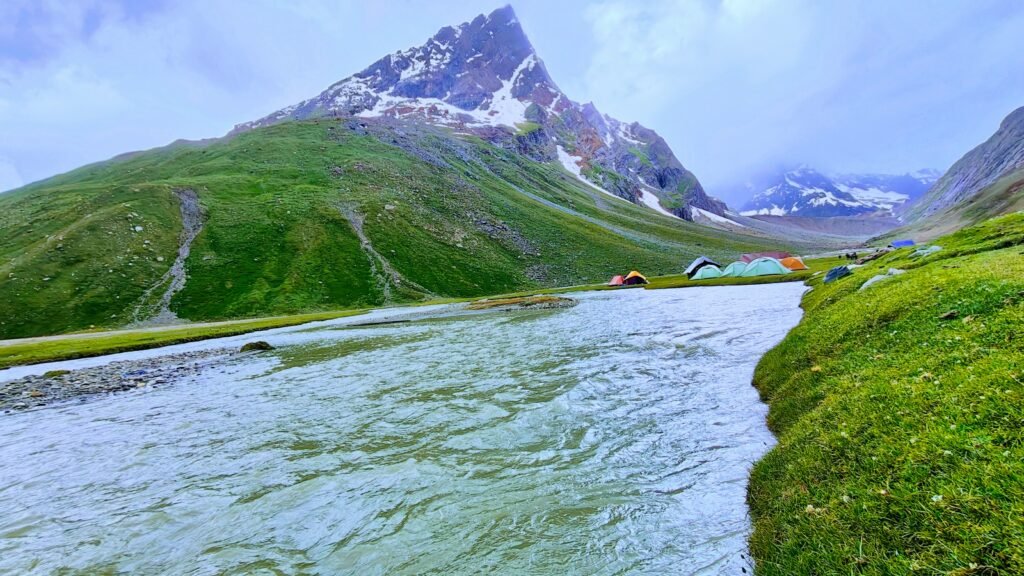
What sets this trek apart is the sheer diversity of landscapes encountered daily. Each day presents a 360-degree panorama of wild, rugged mountains, rolling meadows, and turquoise alpine lakes. The trek visits seven magnificent alpine lakes including Vishansar, Krishansar, Gadsar, Satsar (seven interconnected lakes), Gangabal, and Nundkol, each with its own unique character and surrounded by towering peaks.
The journey showcases Kashmir’s legendary beauty through pine and maple forests, lush green valleys, crystal-clear mountain streams, and the iconic reflections of snow-capped peaks in glacial waters. Wildlife enthusiasts may spot Himalayan black bears, snow leopards, and musk deer in their natural habitat, while the meadows bloom with vibrant wildflowers including daisies and blue poppies during the trekking season.
Highlights and Route
Major Highlights
Alpine Lake Collection: The trek’s crown jewels are its seven pristine alpine lakes. Vishansar and Krishansar lakes are famous for their blue water and abundant trout fish of different colors. Gadsar Lake, situated mid-trek, remains one of the least visited and most serene, with legends claiming its waters have healing powers.
Spectacular Mountain Views: Throughout the journey, trekkers witness magnificent peaks including Kolahoi Peak, Amarnath Peak, Machoi Peak, and Sirbal Peak. Mount Harmukh (5,300 meters) becomes visible from Zajibal Pass, offering stunning views alongside Gangabal and Nundkol lakes.
Diverse Landscapes: From dense forests at lower altitudes to expansive meadows like Nichnai Valley and Satsar Plains, the terrain transforms dramatically each day. The golden reflections of mountains in still lake waters create photographer’s paradise at every turn.
High Mountain Passes: Three major passes challenge and reward trekkers – Nichnai Pass, Gadsar Pass (the highest point), and Zajibal Pass, each offering breathtaking panoramic vistas.
Detailed Route Description
Day 1 – Sonamarg/Shitkadi Base Camp: Acclimatization day with camping beside the Sindh River, surrounded by forests and mountain views.
Day 2 – Shitkadi to Nichnai (11 km): A 3-hour ascent followed by a 1-hour descent and gentle 2-hour ascent to reach Nichnai. The trail passes through the Tabletop meadow offering panoramic views of Sonamarg and the Thajwas range.
Day 3 – Nichnai to Vishansar Lake (12 km): Cross Nichnai Pass and descend through wide green meadows with flowing streams. The day culminates at the stunning Vishansar Lake, reflecting surrounding mountains in its crystal-clear waters.
Day 4 – Vishansar to Gadsar Lake via Gadsar Pass (15 km): The most challenging day involves a steep 2-hour ascent to Gadsar Pass with narrow, sharp trails. The panoramic views from the pass are legendary, followed by a long descent to the serene Gadsar Lake.
Day 5 – Gadsar to Satsar (9 km): A relatively easier day walking through lush grass trails and rocky terrain. Satsar Meadow holds seven interconnected alpine lakes with a gurgling stream snaking through the middle.
Day 6 – Satsar to Gangabal Lake via Zajibal Pass (10 km): Mixed ascents and descents lead to spectacular views of twin lakes – Gangabal and Nundkol – with Mount Harmukh towering above, creating one of the trek’s most memorable vistas.
Day 7 – Gangabal to Naranag (13-15 km): The final descent through alpine meadows, pine forests, and past army posts, ending at Naranag village where transport awaits for the return to Srinagar.
Best Time to Visit
The ideal trekking window for Kashmir Great Lakes is from July to September. This period offers the most favorable conditions for this high-altitude adventure.
Month-by-Month Breakdown
July (Early Season):
- Snow melts significantly from passes
- Valleys burst with colorful wildflowers
- Clear skies provide excellent visibility
- Weather remains stable with minimal rainfall
- Preferred by photographers for pristine conditions
- Trails less crowded early in the month
August (Peak Season):
- Most popular month for trekkers
- Lush green meadows at their best
- Light drizzles occasionally enhance the landscape
- Pleasant daytime temperatures (10-20°C at lower altitudes)
- All campsites fully operational
- Maximum wildflower bloom
September (Late Season):
- Autumn colors begin appearing
- Fewer crowds on the trail
- Stable weather with crisp, clear days
- Slightly colder nights (0-10°C)
- Last chance before winter closure
- Golden hour photography opportunities enhanced
Weather Considerations
Kashmir benefits from the rain shadow effect, receiving minimal rainfall during monsoon season when other Himalayan regions experience heavy downpours. This unique climatic phenomenon makes the Kashmir Great Lakes one of India’s best monsoon treks.
Daytime temperatures range from 10-20°C at lower altitudes, while nights can drop to 0-10°C. At higher altitudes and passes, temperatures drop further, occasionally falling below freezing even in summer. Trekkers should be prepared for unpredictable mountain weather, carrying rain gear for occasional showers and warm layers for cold nights.
Difficulty Level
The Kashmir Great Lakes Trek is classified as moderate to moderately difficult, making it accessible to fit beginners while remaining rewarding for experienced trekkers.
Physical Challenges
Daily Distance: Trekkers cover 10-16 kilometers (5-6 miles) daily, requiring good endurance for long-distance walking. The total trek distance of 68-75 km demands sustained physical effort over 6-8 days.
Altitude Factor: The trek reaches approximately 4,200 meters (13,780 feet) at its highest point, making proper acclimatization crucial to prevent altitude sickness. Starting at 2,377 meters in Sonamarg, the gradual altitude gain helps acclimatization, but trekkers must remain vigilant about symptoms.
Terrain Variety: The trail includes steep ascents and descents, rocky sections, uneven paths, and some slippery areas, especially during or after monsoon. Boulder-hopping sections, particularly near Zajibal Pass, require concentration and balance.
Undulating Profile: Unlike single-summit treks, Kashmir Great Lakes involves continuous ups and downs as you move from one valley to another, crossing multiple passes. This constant elevation change demands strong cardiovascular fitness and leg strength.
Technical Requirements
The trek doesn’t require specialized mountaineering skills or technical equipment. However, proper trekking boots with good grip, trekking poles for stability, and basic mountain trekking knowledge significantly enhance safety and comfort.
Fitness Prerequisites
Recommended Preparation:
- Ability to jog/run 4 kilometers in 30-35 minutes
- Weekly practice of running 8 kilometers in one hour
- Regular resistance workouts including squats, lunges, and push-ups
- Cardiovascular exercises like cycling or swimming
- Practice trekking with a loaded backpack (5-7 kg)
Prior Experience: This trek is recommended for experienced trekkers who have completed at least one high-altitude trek. Understanding how your body reacts to altitude and long trekking days proves invaluable.
Who Should Attempt This Trek?
- Fit beginners with excellent cardiovascular endurance
- Intermediate trekkers looking to level up
- Experienced trekkers seeking spectacular scenery
- Age range: Typically 15-55 years (varies by operator)
- Those committed to proper pre-trek fitness training
How to Get Permit
Permits are mandatory for the Kashmir Great Lakes Trek, covering forest permissions, camping charges, and trek authorization from the Jammu and Kashmir Tourism Department.
Permit Requirements
Multiple permits are required for this trek, and trekking operators typically obtain all permits on trekkers’ behalf, with costs included in the trek package.
Required Permits:
- Trekking Permit: Issued by Jammu and Kashmir Tourism Department
- Forest Permits: Required for trekking through protected forest areas
- Camping Permissions: For designated campsites along the route
- Wildlife Permits: For areas within wildlife zones
Documentation Needed
Trekkers must carry government-issued photo ID such as passport, driver’s license, or Aadhaar card, along with photocopies kept separately.
Essential Documents:
- Original government-issued photo ID (Aadhaar, Voter ID, Passport, Driving License)
- Photocopies of ID proof (keep in different locations)
- Medical fitness certificate (required by most operators)
- 4 passport-size photographs
- Travel insurance covering trekking activities and high-altitude rescue
- Emergency contact information
Permit Process
Through Trekking Companies (Recommended): Most trekkers book through registered operators who handle all permit arrangements. This is the simplest approach as companies manage paperwork, submissions, and approvals.
Independent Trekkers: Can obtain permits from the Forest Department in Srinagar by providing ID proof, medical certificate, and passport photographs. However, logistics become more complex without organized support.
Special Considerations
For Foreign Nationals:
- Additional documentation required
- Higher permit fees apply
- May need Inner Line Permits (ILP) for certain restricted areas
- Visa requirements apply for entry into India
Security Clearances: Due to security concerns and government regulations in Jammu & Kashmir, permits may not be issued or treks may be cancelled last-minute due to political developments. Trekkers should:
- Book flexible or refundable flight tickets
- Consider trek cancellation insurance
- Avoid booking travel before April for summer treks
- Check current situation before making arrangements
Permit Validity
Permits are typically valid for specific dates corresponding to your trek booking. Changes to trekking dates may require permit modifications, so maintain flexibility in your schedule.
Trek Itinerary
A typical 8-day Kashmir Great Lakes Trek itinerary balances trekking days with acclimatization and safety buffers.
Detailed Day-by-Day Schedule
Day 1: Srinagar to Sonamarg/Shitkadi Base Camp
- Distance by Drive: 80-90 km
- Duration: 3-4 hours
- Activities: Pickup from Srinagar (Sheikh Feroze Tours or TRC), drive through scenic Kashmir Valley to Sonamarg
- Altitude: 2,377 meters (7,800 feet)
- Overnight: Camping at Shitkadi base camp beside Sindh River
- Acclimatization: Rest and prepare for trek ahead
Day 2: Shitkadi to Nichnai
- Trek Distance: 10-11 km
- Duration: 6-7 hours
- Terrain: Ascent through meadows to Tabletop, gradual descent, then ascent to Nichnai
- Altitude Gain: 2,377m to 3,505m (11,500 feet)
- Highlights: Panoramic Sonamarg valley views, Thajwas glacier sightings, pine forests
- Overnight: Camping at Nichnai meadows
Day 3: Nichnai to Vishansar Lake
- Trek Distance: 11-12 km
- Duration: 6-7 hours
- Terrain: Climb to Nichnai Pass (3,800m), descent through wide meadows
- Altitude: 3,505m to 3,710m (12,175 feet)
- Highlights: First alpine lake viewing, twin lakes (Vishansar-Krishansar) visible, mountain reflections
- Overnight: Camping at Vishansar Lake shore
Day 4: Vishansar to Gadsar Lake via Gadsar Pass
- Trek Distance: 14-15 km
- Duration: 8-9 hours (longest day)
- Terrain: Steep 2.5-hour ascent to Gadsar Pass, challenging descent with rocky sections
- Altitude: Peak at 4,206m (13,800 feet), descend to 3,600m
- Highlights: Spectacular pass views, sight of Vishansar-Krishansar together, pristine Gadsar Lake
- Challenge Level: Highest difficulty due to altitude and distance
- Overnight: Camping at Gadsar Lake
Day 5: Gadsar to Satsar
- Trek Distance: 8-9 km
- Duration: 4-5 hours (shorter day for recovery)
- Terrain: Moderate slopes with mix of meadows, rocky paths, stream crossings
- Altitude: 3,600m to 3,650m (11,975 feet)
- Highlights: Seven interconnected Satsar lakes, sweeping meadows, serene landscape
- Overnight: Camping at Satsar meadows
Day 6: Satsar to Gangabal via Zajibal Pass
- Trek Distance: 10-11 km
- Duration: 6-7 hours
- Terrain: Boulder sections, high ridge climb to Zajibal Pass (4,080m), steep descent
- Altitude: Peak at 4,080m, descend to 3,580m
- Highlights: Mount Harmukh (5,300m) views, twin Gangabal-Nundkol lakes, most photogenic campsite
- Overnight: Camping at Gangabal Lake shore
Day 7: Gangabal to Naranag
- Trek Distance: 13-15 km
- Duration: 6-7 hours
- Terrain: Long descent through alpine meadows, pine forests, Trunkhol meadows
- Altitude: 3,580m to 2,250m (7,380 feet)
- Highlights: Final mountain views, traditional Kashmiri villages, ancient Naranag temple ruins
- Activities: Trek ends at Naranag, drive 2-3 hours (70 km) back to Srinagar
- Overnight: Hotel/houseboat in Srinagar
Day 8: Buffer Day & Departure
- Purpose: Weather contingency or delayed completion
- Activities: Srinagar sightseeing if trek completed early, or complete trek if delayed
- Departure: Drop to Srinagar airport or bus stand
Optional Variations
Some operators offer extended itineraries with:
- Additional rest day at Gangabal for exploring Harmukh base
- Side trip to Nundkol Lake
- Cultural immersion day in Srinagar
- Visit to Sonamarg attractions before trek
Things to Consider
Safety and Health
Altitude Sickness Prevention:
- Take it slow, drink plenty of water (3-4 liters daily), and listen to your body during the trek
- Watch for symptoms: headache, nausea, dizziness, loss of appetite
- Inform trek leader immediately if symptoms develop
- Carry altitude sickness medication (Diamox) after doctor consultation
- Don’t ignore symptoms or push through discomfort
Physical Preparation:
- Start training 6-8 weeks before trek
- Focus on cardiovascular endurance and leg strength
- Practice with loaded backpack on inclines
- Ensure you’re healthy with no underlying conditions
Weather Preparedness: Mountain weather can be unpredictable; carry proper rain gear, waterproof covers, and keep extra clothing dry. Trails can become muddy and slippery, requiring proper footwear and caution.
Essential Gear Checklist
Clothing:
- Trekking boots with good ankle support and grip
- 3-4 pairs of moisture-wicking trekking socks
- Thermal innerwear (top and bottom)
- Quick-dry trekking pants (2-3 pairs)
- Full-sleeve trekking t-shirts (3-4)
- Fleece jacket or down jacket
- Waterproof rain jacket and pants
- Warm jacket for high-altitude nights
- Sun hat/cap and woolen cap
- Gloves (insulated for cold)
- Extra pair of shoes/slippers for campsite
Equipment:
- Backpack (50-60 liters) with rain cover
- Daypack (20-30 liters) for essentials
- Trekking poles (highly recommended)
- Headlamp or flashlight with extra batteries
- Sunglasses (UV protection mandatory)
- Water bottles (2 liters capacity minimum)
- Personal medical kit with prescribed medications
- Toiletries and biodegradable wet wipes
- Sunscreen (SPF 50+) and lip balm
- Power bank for electronics
- Dry bags for keeping clothes dry
Documents & Miscellaneous:
- Original ID proof and photocopies
- Trek booking confirmation
- Medical insurance details
- Emergency contact numbers
- Personal medications
- Energy bars and dry fruits
- Camera with extra batteries
- Cash (limited ATM access in mountains)
Cultural Sensitivity
- Respect local Kashmiri customs and traditions
- Dress modestly in villages
- Seek permission before photographing locals
- Support local economy by using local guides and porters
- Learn basic Kashmiri phrases for interaction
Environmental Responsibility
- Practice “Leave No Trace” principles
- Carry all waste back (no littering)
- Use designated toilet facilities
- Don’t contaminate water sources
- Avoid single-use plastics
- Stay on marked trails to prevent erosion
- Don’t disturb wildlife or pick flowers
- Use biodegradable soap away from water sources
Trek Logistics
Group Size: Most operators limit groups to 12-16 trekkers with 1:8 trek leader to trekker ratio for safety.
Accommodation: Twin-sharing tents at all campsites; single-occupancy available for additional cost.
Meals: Operators serve varied vegetarian dishes including biryanis, curries, dal, regional specialties like Kashmiri nadru and haakh, with rotis and rice. Evening snacks include tea, soup, maggie, and pakoras. Desserts like gulab jamun and phirni are served.
Offloading Service: Most operators offer porter/mule services to carry personal bags (up to 10 kg) for additional charges (INR 3,000-4,500 for full trek). Recommended for those wanting to trek with just a daypack.
Communication: Mobile networks work in Sonamarg and Naranag but have no coverage during the trek. Postpaid connections or local J&K prepaid required.
Charging Facilities: No charging points available on trek; carry power banks fully charged.
How to Reach Kashmir Great Lakes Trek
The base point for Kashmir Great Lakes Trek is Srinagar, the summer capital of Jammu & Kashmir. All trekkers must reach Srinagar first, from where organized transport takes you to Sonamarg (trek starting point).
Reaching Srinagar
By Air (Recommended & Fastest):
Sheikh ul-Alam International Airport in Srinagar is located approximately 12 km from the city center, taking about 30 minutes to reach. This is the most convenient option for reaching Kashmir.
Flight Connectivity:
- Direct flights available from major cities: Delhi (1.5-2 hours), Mumbai (3-4 hours), Bangalore, Chennai, Kolkata, Chandigarh
- Delhi is the most frequent connection point with multiple daily flights
- Airlines operating: Air India, IndiGo, SpiceJet, GoAir, Vistara
- Flight duration from Delhi: approximately 1 hour 15 minutes
Airport Facilities:
- Strict security regulations with 1.2 km security cordon
- Arrive at least 2-3 hours before departure
- Prepaid taxi service available outside
- Free shuttle buses to city center
Important Notes:
- Book flexible/refundable flight tickets due to potential trek cancellations
- Avoid booking flights immediately before/after trek; keep 1-2 buffer days
- Winter flights may face cancellations due to weather
- Flights can be affected by security situations
By Train:
Srinagar does not have full railway connectivity yet. The nearest major railway station is Jammu Tawi, located 290 km (8-10 hours) from Srinagar. Banihal/Udhampur stations are alternative options at approximately 200 km.
Train Routes:
- Jammu Tawi well-connected to Delhi, Mumbai, Chennai, Kolkata, Pune, Lucknow
- Major trains: Rajdhani Express (Delhi-Jammu), Jammu Mail, Jhelum Express (Mumbai-Jammu), Himgiri Express (Kolkata-Jammu)
- Journey times: Delhi to Jammu (10-12 hours), Mumbai to Jammu (30+ hours)
From Jammu to Srinagar:
- Multiple options: state transport buses, private buses, shared taxis, or pre-booked cabs
- Journey time: 8-10 hours via NH-44
- Road offers scenic mountain views through Jawahar Tunnel
- State transport buses: Regular comfortable services available
- Private taxis: More expensive but flexible and comfortable
By Road:
Srinagar is connected via National Highway 44 (NH-44), offering scenic routes through northern India.
From Major Cities:
Delhi to Srinagar:
- Distance: 876 km
- Duration: 15-18 hours (recommend splitting into 2 days)
- Route: Delhi – Karnal – Ludhiana – Jammu – Srinagar
- Stopover suggestions: Jammu (overnight rest)
Mumbai to Srinagar:
- Distance: 2,200 km
- Duration: 3-4 days with stopovers
- Route: Mumbai – Ahmedabad – Udaipur – Jaipur – Delhi – Jammu – Srinagar
- Stopover suggestions: Jaipur, Jammu
Bangalore/Chennai to Srinagar:
- Distance: 2,800-3,000 km
- Duration: 4-5 days
- Route: Via Hyderabad – Nagpur – Delhi – Jammu – Srinagar
Bus Services:
- State transport and private deluxe buses connect Jammu to Srinagar
- Direct buses from major cities to Jammu, then transfer to Srinagar
- Overnight buses available from Delhi/Chandigarh to Srinagar
- Journey time from Jammu: 7-10 hours
Self-Drive Considerations:
- Well-maintained roads, especially NH-44
- Stunning scenery throughout journey
- Requires experience with mountain driving
- Weather can affect road conditions
- Petrol pumps available at regular intervals
- Accommodation available at multiple points
Srinagar to Sonamarg (Trek Starting Point)
Distance: 80-90 km
Duration: 3-4 hours
Options:
- Organized Trek Transport: Most trekking companies provide pickup from designated points in Srinagar (typically Tourist Reception Centre or specific hotels) and transport to Shitkadi base camp near Sonamarg. This is included in trek packages.
- Private Taxi: Available for hire from Srinagar (INR 2,500-4,000 one way). Can be arranged through hotels or taxi stands.
- Shared Taxi: More economical option (INR 300-500 per person), departs when full from designated taxi stands.
- State Transport Bus: Cheaper option but less flexible timing.
Return Journey: Naranag to Srinagar
Distance: 60-70 km
Duration: 2-3 hours
Trek operators typically arrange transport from Naranag (trek end point) back to Srinagar, included in package. Drop-off is usually at Nishat Garden or city center between 6:30-7:30 PM, allowing evening flights if needed (though not recommended).
Pre-Trek Arrival Recommendations
- Arrive at least 1 day before trek start to avoid delays and allow rest
- Keep 2-3 buffer days in your schedule for potential weather or security delays
- Don’t book tight connections; flexibility is crucial in Kashmir
- Use arrival day for last-minute shopping, permit verification, and acclimatization
- Avoid booking return flights on trek’s last scheduled day; use buffer day
Local Transportation in Srinagar
- Taxis: Widely available, negotiate fares beforehand
- Auto-rickshaws: For short distances within city
- Shikaras: Traditional boats for Dal Lake transport
- Local buses: Most economical but crowded
- Pre-booked cabs: Recommended for airport transfers
Important Travel Tips
- Documentation: Carry original ID proof at all times; multiple checkpoints exist
- Security: Be prepared for security checks, especially near airport and military areas
- Connectivity: Get a postpaid connection or local J&K prepaid SIM; outstation prepaid often doesn’t work
- Cash: Carry sufficient cash; ATMs limited during trek, though available in Srinagar
- Weather Monitoring: Check weather forecasts and road conditions before travel
- Flexibility: Kashmir’s situation requires adaptable travel plans; don’t have rigid schedules
- Insurance: Consider travel insurance covering trip cancellations due to security situations
Final Tips for Success
Booking Considerations:
- Book with reputable operators having good safety records
- Read reviews and verify operator credentials
- Understand cancellation policies, especially for Kashmir-specific situations
- Clarify what’s included in package (permits, meals, equipment, transport)
Training Timeline:
- Start fitness regime 2-3 months before trek
- Include cardiovascular training, strength exercises, and flexibility work
- Practice hiking with loaded backpack
- Gradually increase training intensity
Mental Preparation:
- Research trek thoroughly through videos and blogs
- Set realistic expectations about difficulty and comfort levels
- Prepare for basic camping conditions
- Embrace the adventure mindset
Photography:
- Carry extra batteries and memory cards
- Protect equipment from moisture
- Best light during golden hours (sunrise/sunset)
- Respect others’ privacy when photographing
Emergency Preparedness:
- Know symptoms of altitude sickness
- Understand emergency evacuation procedures
- Carry trek leader’s contact information
- Inform family about itinerary and check-in points
The Kashmir Great Lakes Trek offers an unparalleled Himalayan experience combining natural beauty, physical challenge, and cultural immersion. With proper preparation, respect for the environment, and a spirit of adventure, this trek promises memories that last a lifetime. The stunning alpine lakes, vast meadows, and magnificent mountain vistas truly validate Kashmir’s reputation as paradise on earth.
Remember: In Kashmir, flexibility and patience are as important as physical fitness. Embrace the journey, respect the mountains, and the Great Lakes will reward you with experiences beyond imagination.